
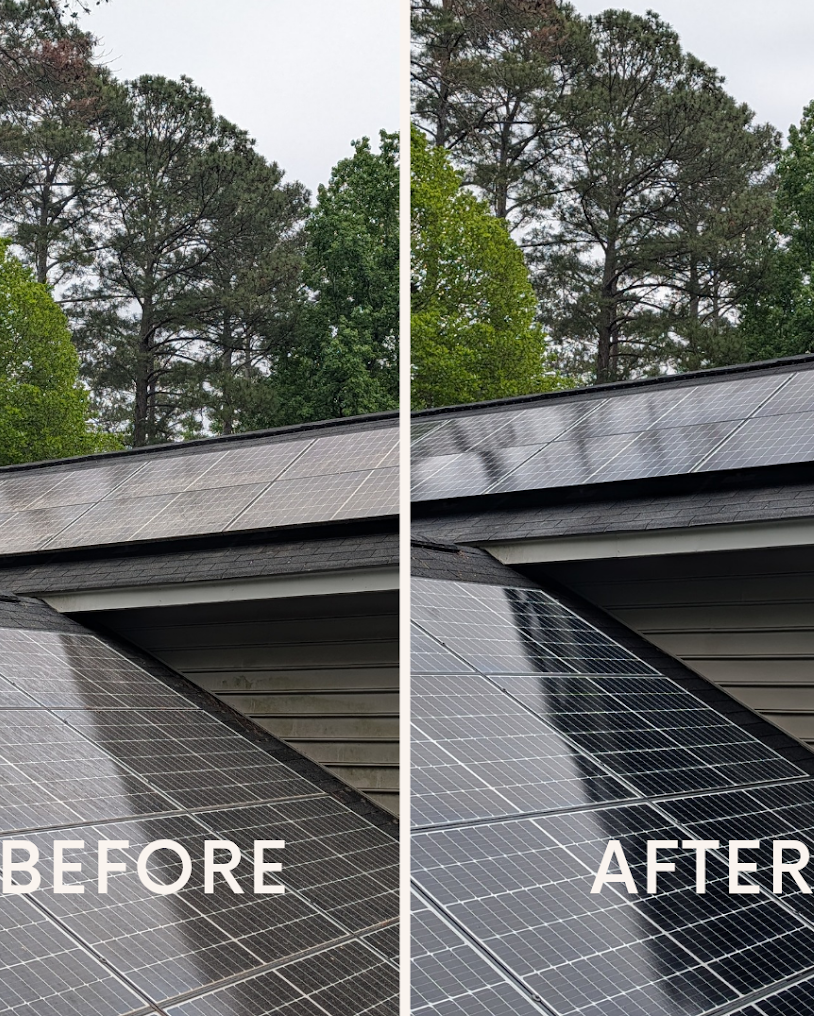
Panels That Capture Full Sunlight Exposure
Solar Panel Cleaning in Columbia for installations affected by pollen, dust, and bird droppings
Pollen accumulation during spring months creates a yellow film across solar panel surfaces that blocks direct sunlight from reaching photovoltaic cells. Bird droppings contain uric acid that etches glass over time, and dust from construction activity or agricultural operations settles into textured panel surfaces where rain alone cannot dislodge it. Foxhound Pressure Clean uses cleaning methods designed specifically for solar installations in Columbia, Forest Acres, Chapin, and surrounding areas, applying techniques that remove contaminants without scratching anti-reflective coatings or damaging electrical junction boxes.
The Midlands environment contributes to rapid buildup—pine pollen blankets horizontal surfaces each spring, and red clay dust becomes airborne during dry periods, settling onto any elevated structure. Cleaning removes these layers and restores the panel's ability to absorb maximum sunlight throughout the day.
Arrange an on-site consultation to review panel accessibility and develop a maintenance schedule.
What Proper Solar Panel Maintenance Requires
Solar panel cleaning uses deionized water and soft brushes or low-pressure rinsing to avoid mineral deposits and surface abrasion. Standard tap water leaves calcium and magnesium residue that creates new spots as it evaporates, while aggressive scrubbing scratches the glass surface and reduces light transmission. The process includes inspection of mounting hardware and electrical conduit to identify any physical damage that may require attention from the installation contractor.
Once cleaned, panels display uniform coloring without the mottled appearance caused by uneven contamination, and the glass surface reflects light evenly rather than scattering it through a haze of particulate buildup. Removal of bird droppings eliminates localized shading that can create hot spots and stress individual cells within the panel array.
Pairing solar panel cleaning with roof and house washing services creates efficiency by addressing all elevated surfaces during a single visit, and it prevents runoff from roof cleaning from recontaminating freshly cleaned panels. Regular maintenance preserves the appearance of the installation and maintains the surface conditions necessary for optimal sunlight capture across the array.
Answers to Frequent Solar Cleaning Questions
Questions about solar panel maintenance typically address timing, safety concerns, and what the cleaning process involves for residential installations.
Foxhound Pressure Clean incorporates solar panel cleaning into comprehensive exterior maintenance schedules that address roofing, siding, and outdoor surfaces during coordinated service visits. Contact our team to establish a routine maintenance plan that accounts for seasonal pollen cycles and environmental conditions affecting your installation.
What contaminants accumulate on solar panels in Columbia?
Pollen from pine and oak trees, red clay dust, bird droppings, and airborne organic material settle on panel surfaces, with heaviest accumulation occurring during spring pollen season and after extended dry periods when dust becomes airborne.
How often should solar panels be cleaned?
Cleaning frequency depends on environmental exposure—panels near trees or agricultural areas may require quarterly maintenance, while installations in open areas with minimal organic debris may only need annual cleaning to maintain appearance and function.
What cleaning methods are safe for solar panels?
Deionized water applied with soft microfiber tools or low-pressure rinsing avoids scratching anti-reflective coatings, while harsh chemicals, abrasive pads, or high-pressure washing can damage the glass surface and void manufacturer warranties.
Can I clean solar panels myself?
Accessing rooftop panels safely requires proper fall protection equipment and ladder stabilization, and using incorrect water sources or cleaning tools can cause surface damage that reduces light transmission and creates permanent etching on the glass.
Does cleaning improve how the system performs?
Removing pollen, dust, and bird droppings restores full sunlight exposure to photovoltaic cells, eliminating the shadowing and light diffusion caused by surface contamination that prevents panels from capturing available solar energy.